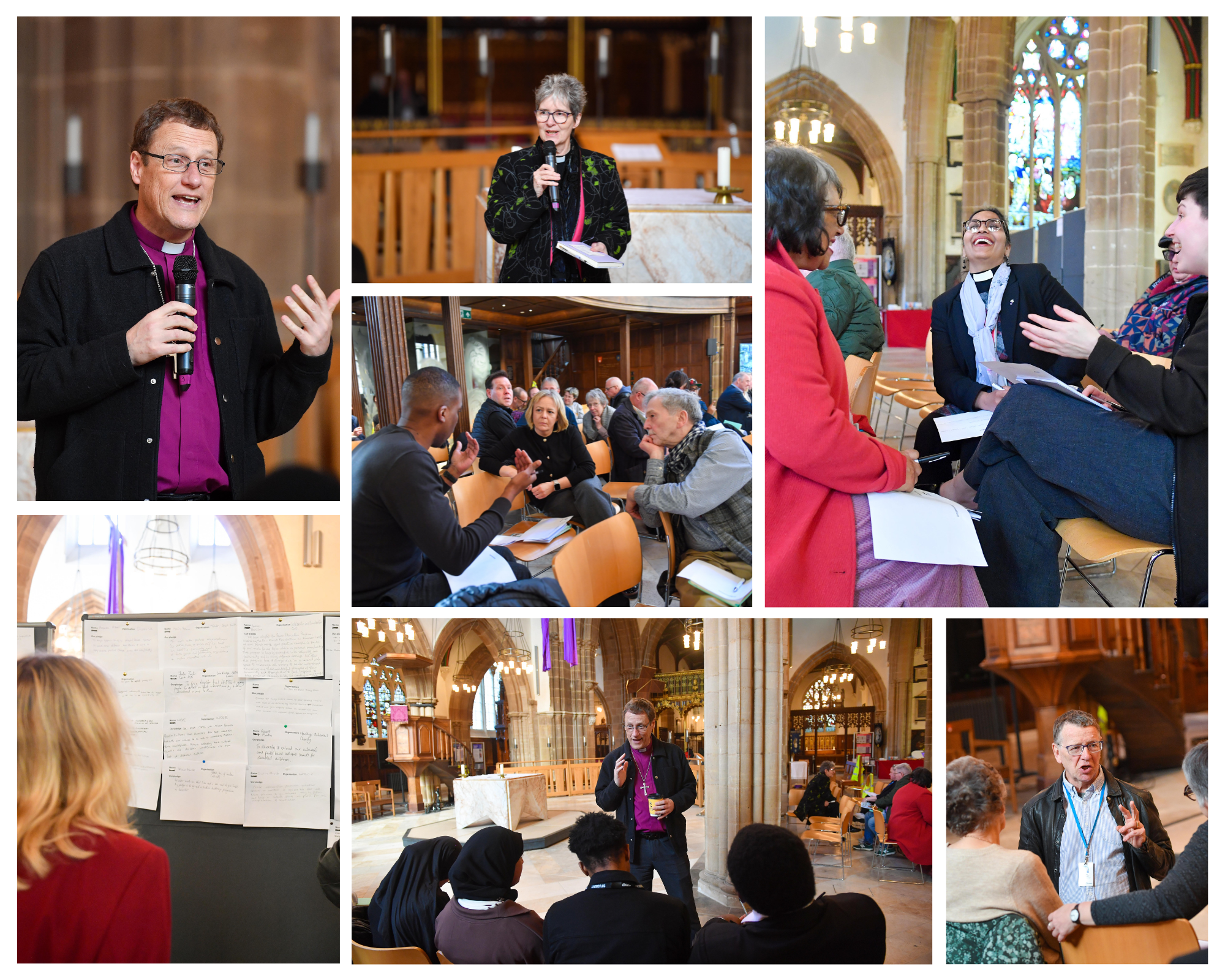
Around 120 people from organisations across the city gathered at Leicester Cathedral to mark one year since the launch of the Intercultural City project, to hear about the successes so far, and to make pledges for the future.
After a welcome from Dean Karen, Bishop Martyn introduced the event with a reminder of the vision behind becoming an Intercultural City. Rather than different groups living side by side, it is about building connections across difference, so that we can all learn from and mutually enrich one another. Bishop Martyn rooted this in the theological conviction that all people are made in the image of God, but said that the vision is something that can be supported by people of all faiths and none.
Turning to the future, Bishop Martyn explained that this is a long-term project – and the hope is that organisations across the city will think about how they can bring people together across difference, and make those interactions as healthy as possible.
Chief Constable David Sandall then spoke about how the police were supporting the Intercultural City vision, and were particularly interested in engaging children and young people as they are the future of the city and every organisation within it.
Recognising the importance of children and young people’s voices, those gathered in the cathedral then heard presentations from pupils from St John the Baptist primary school, and students from Gateway College, Leicester College, and QE College.
The pupils from St John the Baptist primary school described how they saw interculturalism play out in their school, where 46 different languages are spoken, and how their school values brought together children from different backgrounds.
Each of the presentations given by college students covered what they liked about Leicester, what fears and misunderstandings got in the way of people living well together, and what could help people to do so.
A common theme was how much Leicester’s diversity was valued – students described how it gave them freedom to be themselves, and abundant opportunities to learn about different cultures and histories. But they also recognised that fear of the unknown, stereotypes – especially on social media – and mistrust could prevent people from connecting across difference.
The students from all the colleges were confident that everyone as individuals could help make a difference – by staying open-minded, educating ourselves, being kind, and standing up to discrimination and prejudice. But they also had ideas for what leaders in the city should do – by being role models, and creating opportunities for people to meet one another through community centres and city-wide events held at different locations in the city.
Riaz Ravat, Deputy Director of the St Philip’s Centre, shared the success of a recent programme in Eyres Monsell. Working with the Eyres Monsell Club for Young People, the St Philip’s Centre had connected a group of young people to local faith practitioners, taken them on visits to various places of worship, and ended with a walk down the Golden Mile. The programme had had such an impact on those young people that adults in their lives had asked the St Philip’s Centre to run a version for them as well.
Everyone present was then invited to discuss with others how they, as an individual or an organisation, could help bring people together across difference and help Leicester become more intercultural, which they then wrote up as pledges.
Revd Dr Tom Wilson, Director of the St Philip's Centre, who organised the event, said: “I was particularly encouraged by the young people’s willingness to both recognise the challenges, but at the same time propose concrete solutions. It was also great to see so many organisations pledging to do their bit to intentionally engage with people who see the world differently, and build relationships of understanding and trust.”